

Table of Contents
If you’re tired of juggling bulky power solutions that die mid-shoot or weighing down your gear with oversized batteries, a mini V-mount battery offers a compact, powerful fix. Designed for content creators, photographers, and videographers who need reliable energy on the go, this portable power pack balances portability and performance without compromises. Below, we break down the basics, key benefits, and actionable tips to choose the right one for your setup.
What Is a Mini V-Mount Battery?

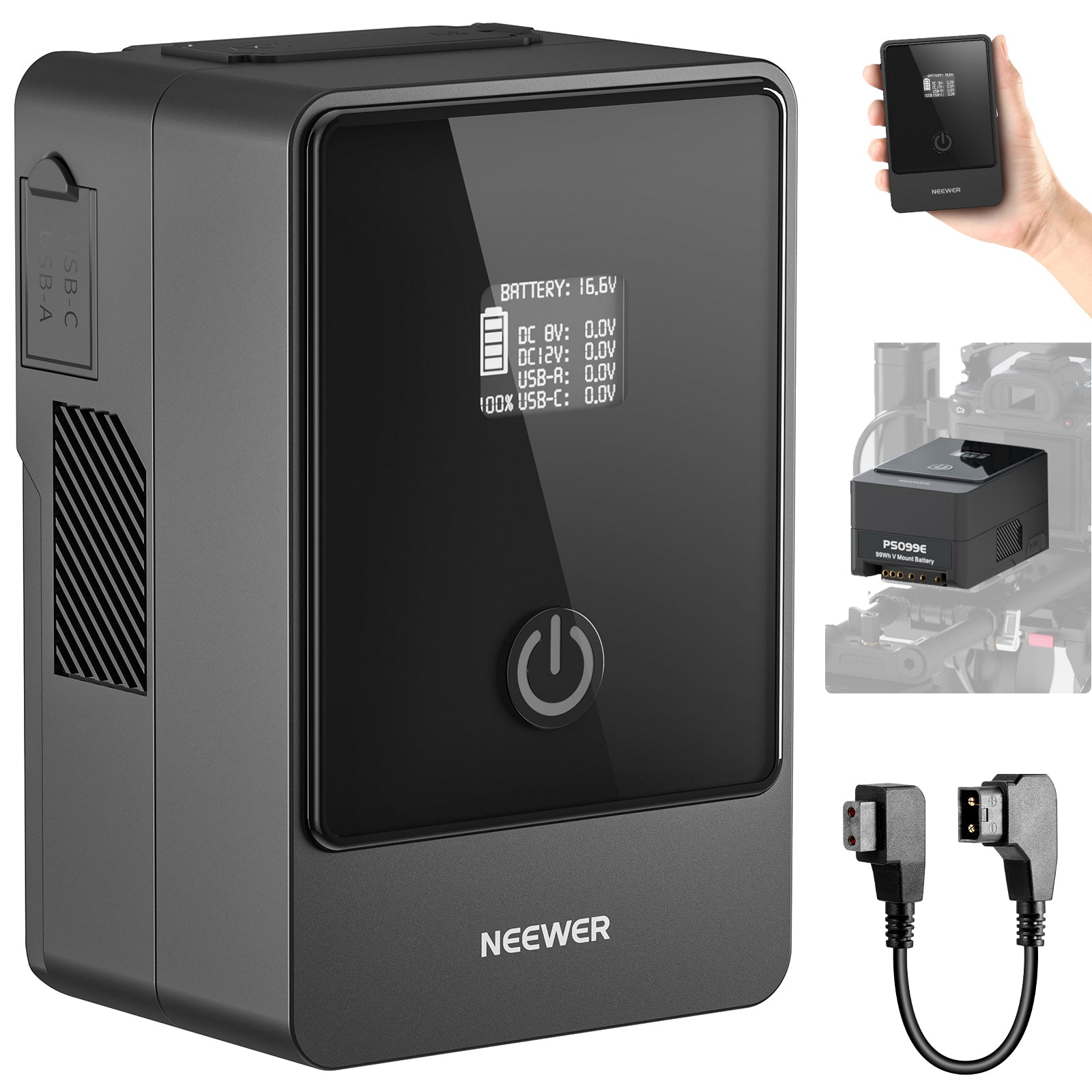
A Mini V-Mount battery is a compact, high-output power pack designed for filmmakers and photographers who want strong, reliable power without carrying a bulky brick. It gives you the runtime of a big battery in a body that fits in your pocket or clips cleanly onto a lightweight rig. Think of it as a full-size V-Mount battery that went to the gym, trimmed the fat, and kept all the muscle. If you shoot travel, documentary, social content, or handheld video, it’s one of the most useful upgrades you can make. Here’s the idea in simple, practical terms:
- A Smaller Battery That Still Runs Professional Gear
- Portable Power for Shooters on the Move
- Multiple Outputs for Modern Setups
- Ideal for Compact Rigs and Long Shoot Days
Why Use a Mini V-Mount Battery?

1. Lighter Gear Without Sacrificing Power
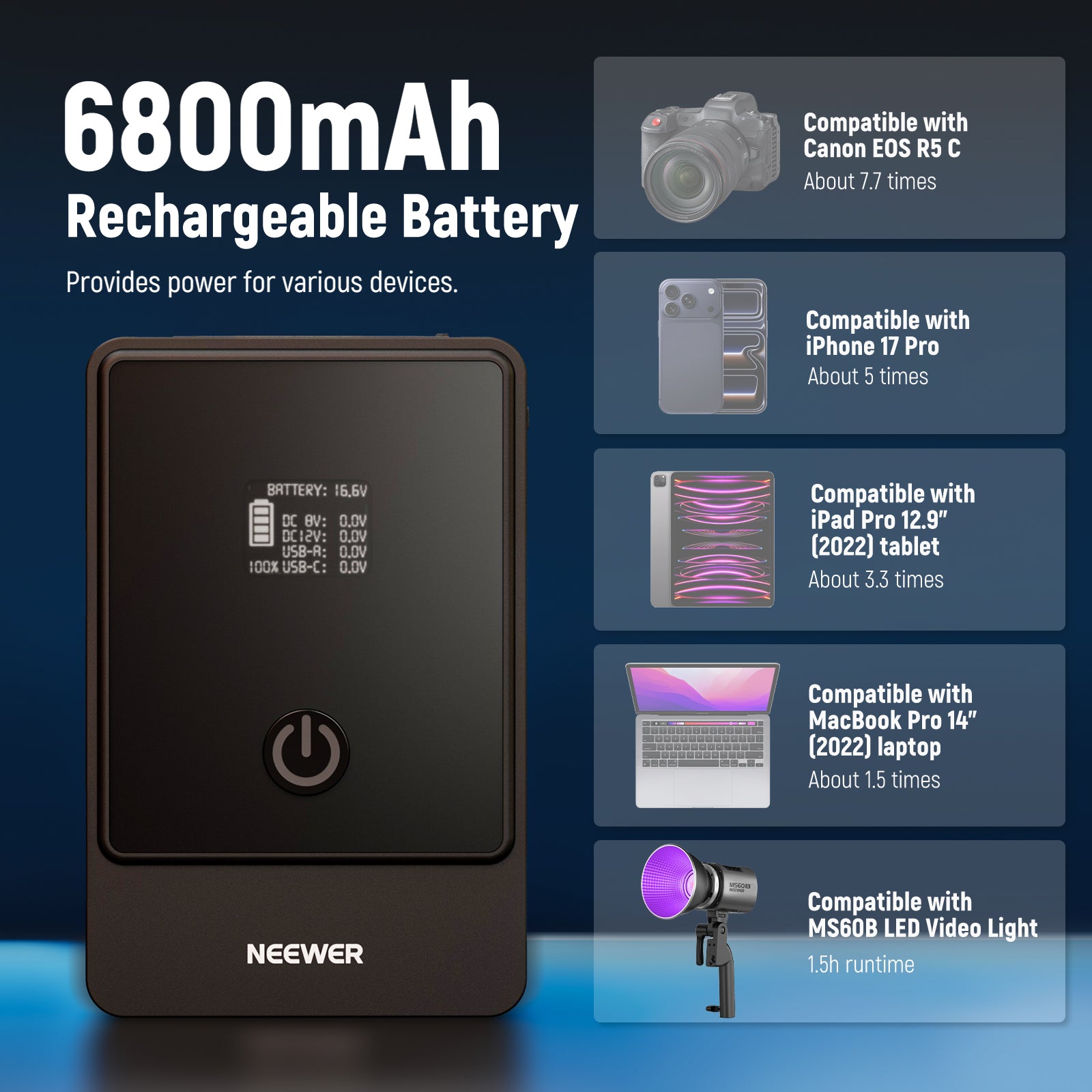
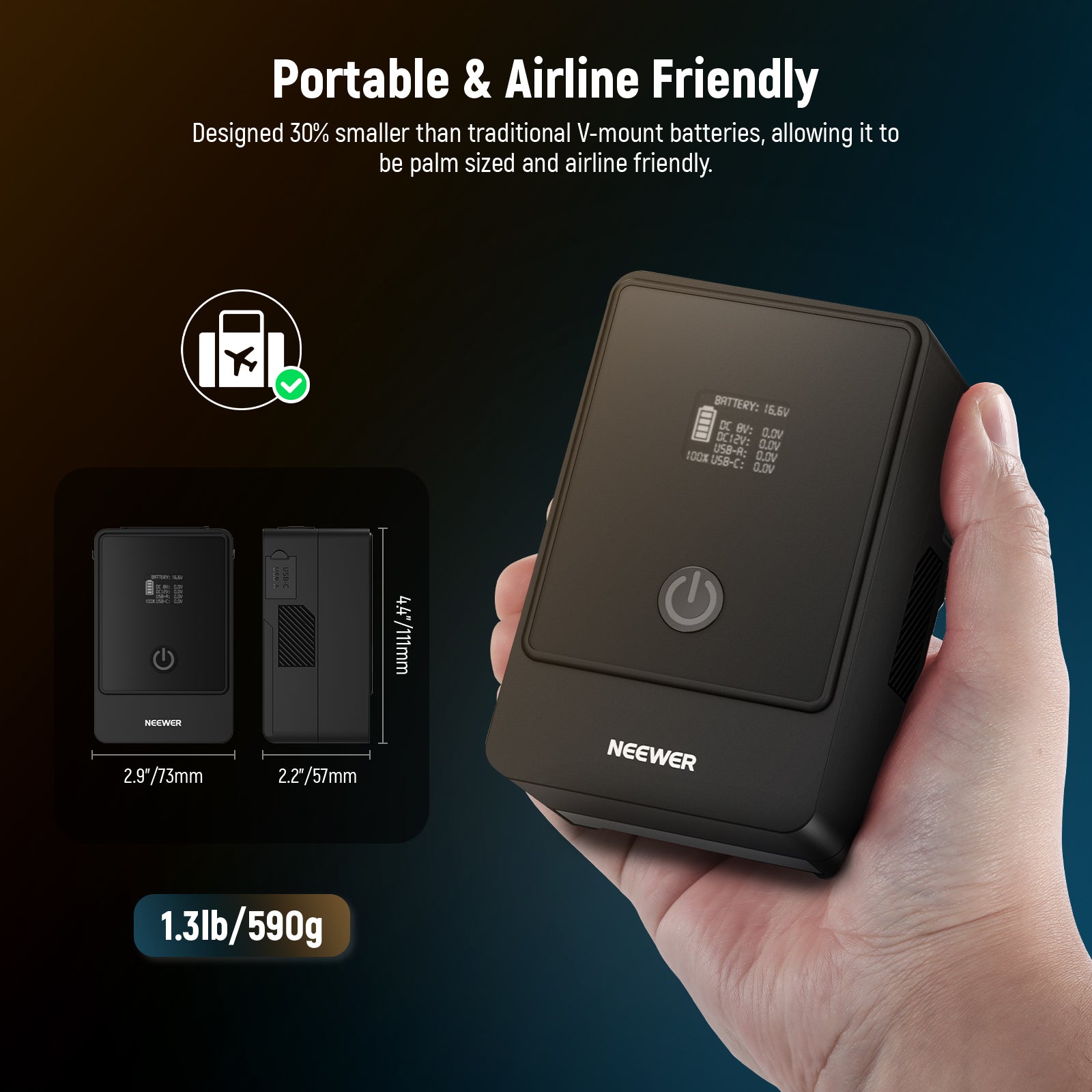
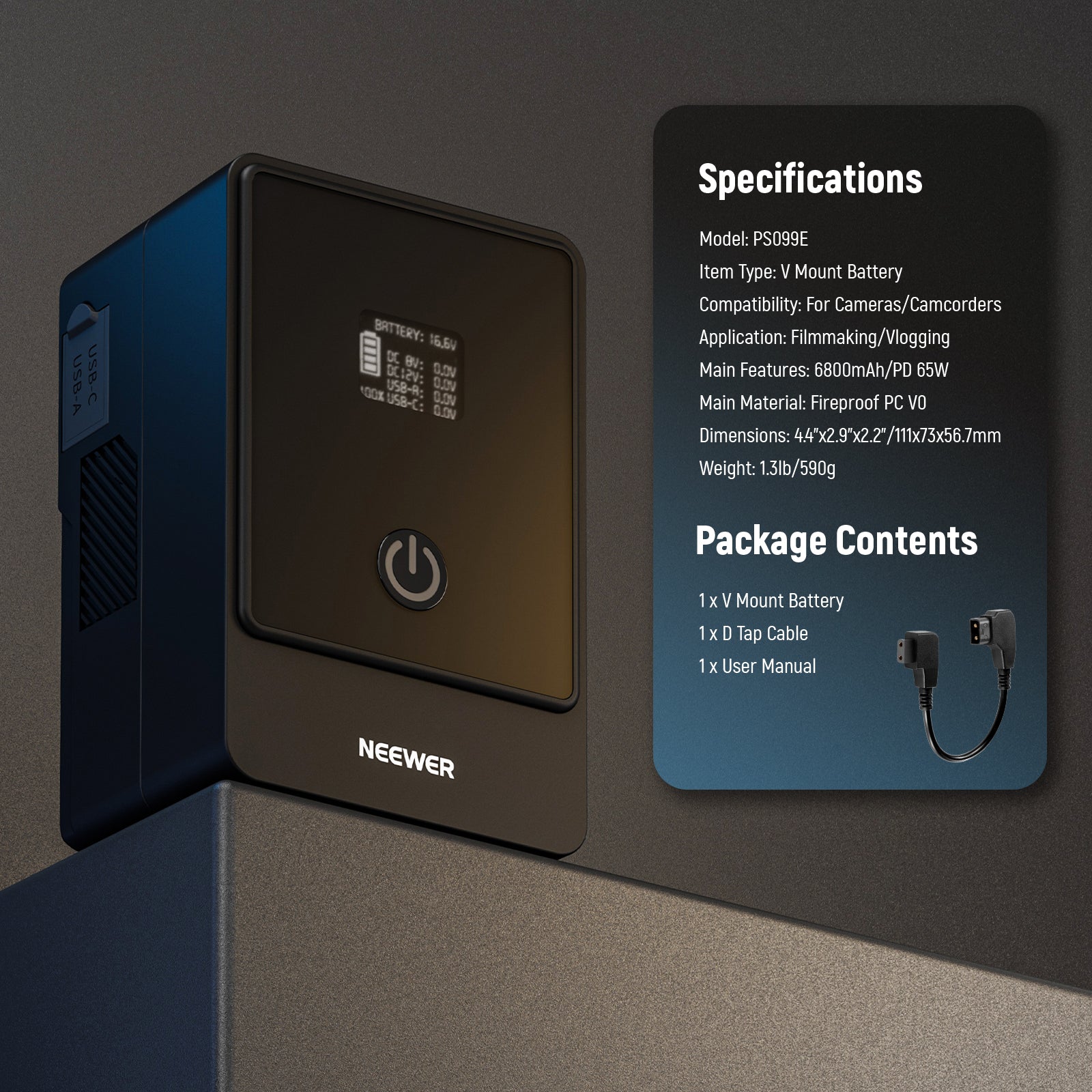
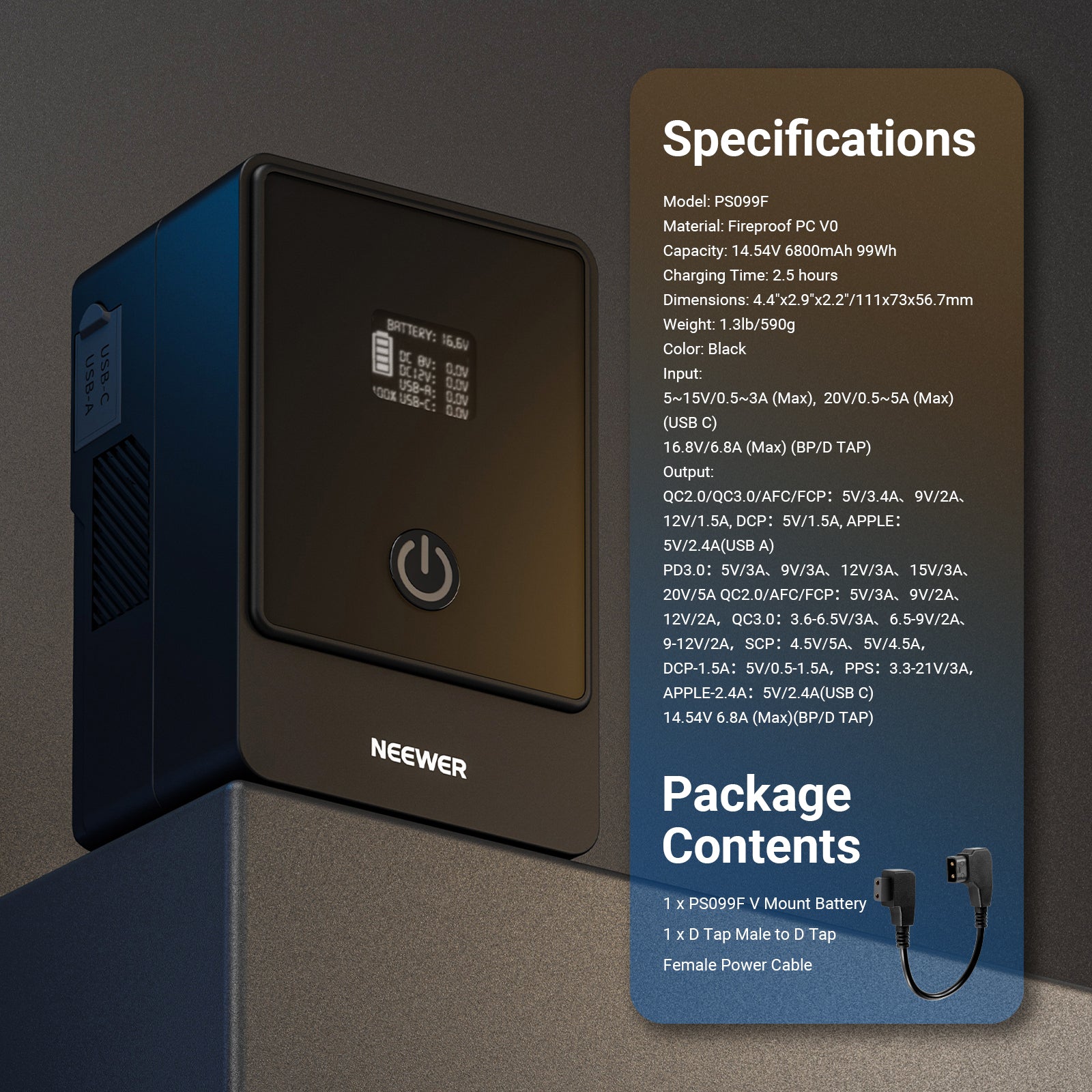
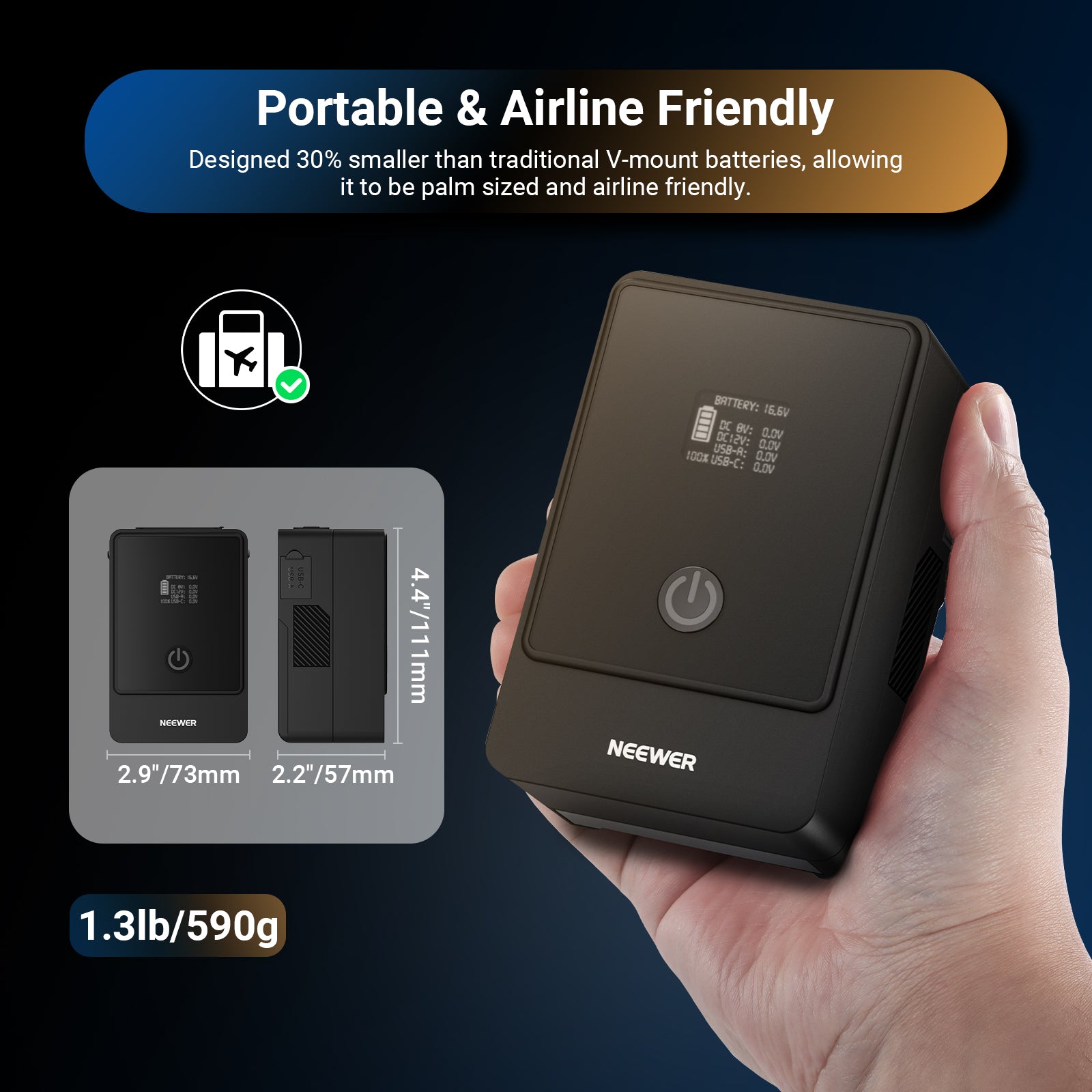
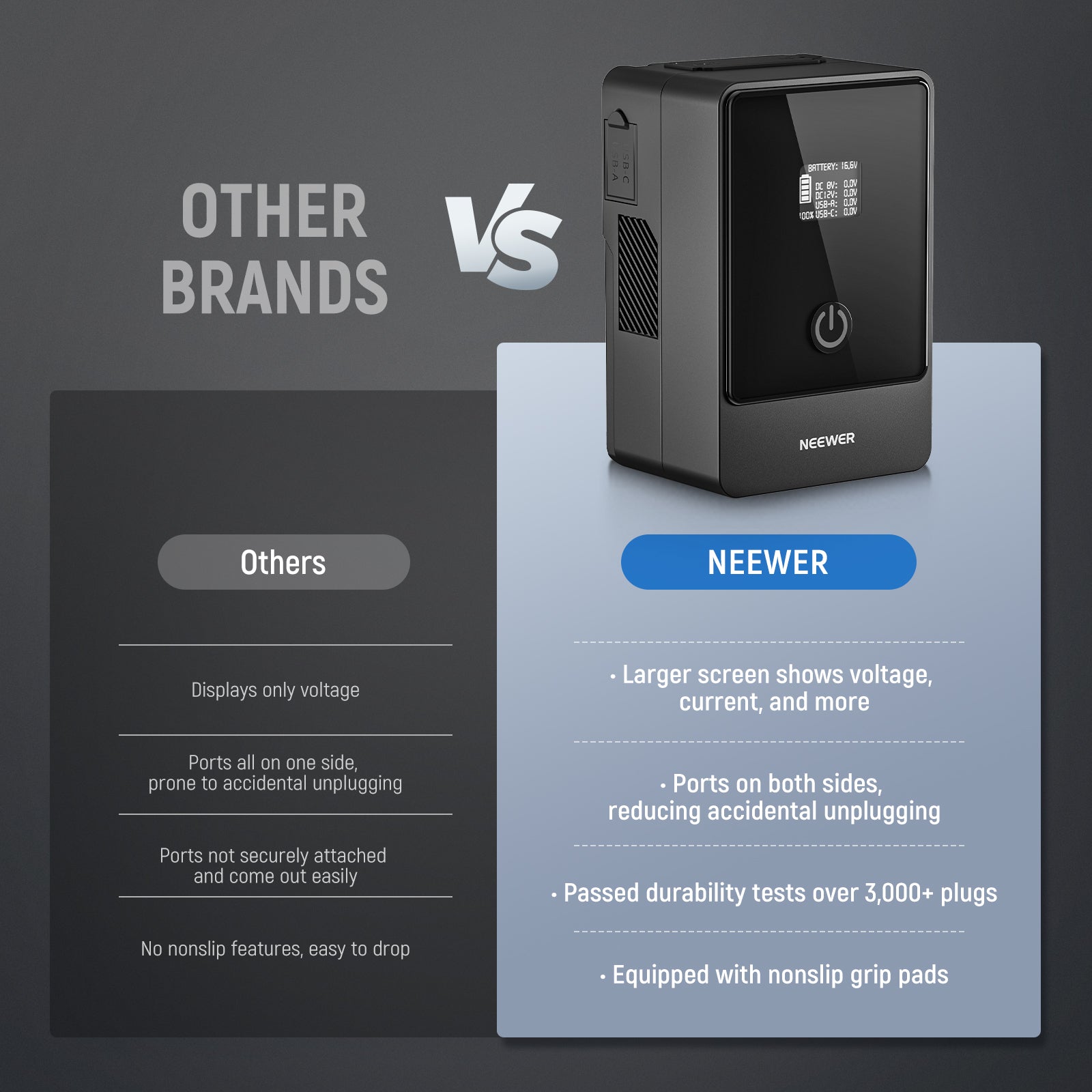
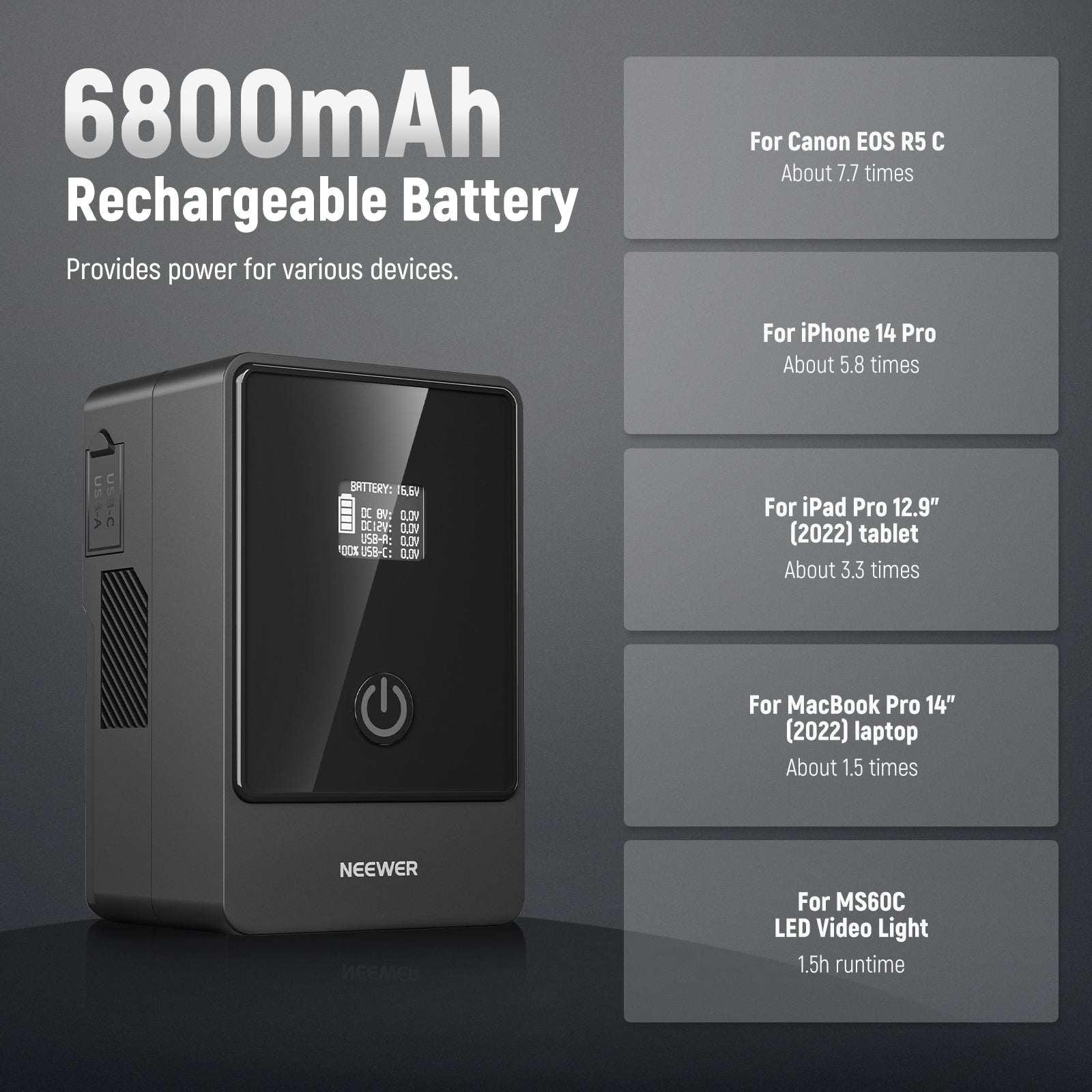
Traditional power solutions force a trade-off: more power means more weight. Full-size V-mount batteries can add 3–5 lbs to your kit, which strains shoulders during long shoots or limits mobility when hiking to locations. Mini V-mount batteries eliminate this compromise by delivering substantial capacity at a fraction of the weight. For example, a 6800mAh mini V-mount weighs just 1.3 lbs—40% lighter than a comparable full-size battery.
2. Longer Runtimes for Small Cameras and Lights
USB power banks are popular for their portability, but they fall short when powering high-draw devices like mirrorless cameras, LED panel lights, or external monitors. Most USB-C power banks max out at 100W (often less for compact models), while mini V-mount batteries deliver consistent 14.8V power with continuous draw ratings of 30–60W—enough to keep even power-hungry gear running for hours. For example, a 45 Wh mini V-mount can power a 15W LED light for 3 hours straight, compared to just 1.5 hours with a 30 Wh USB power bank. This extended runtime is a game-changer for shoots that require extended periods of operation, like wedding ceremonies, documentary interviews, or outdoor events.
3. A Clean, All-in-One Power Solution

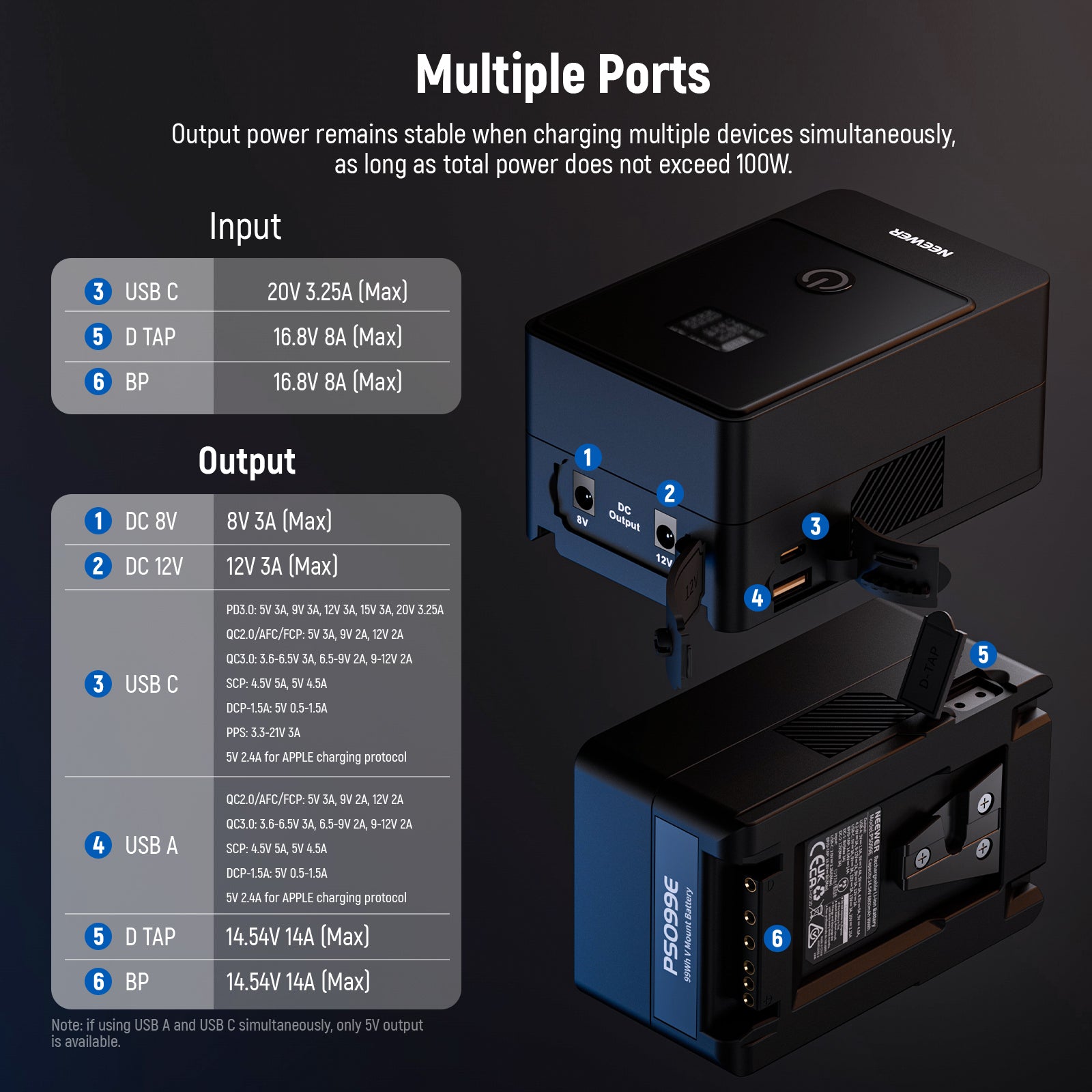
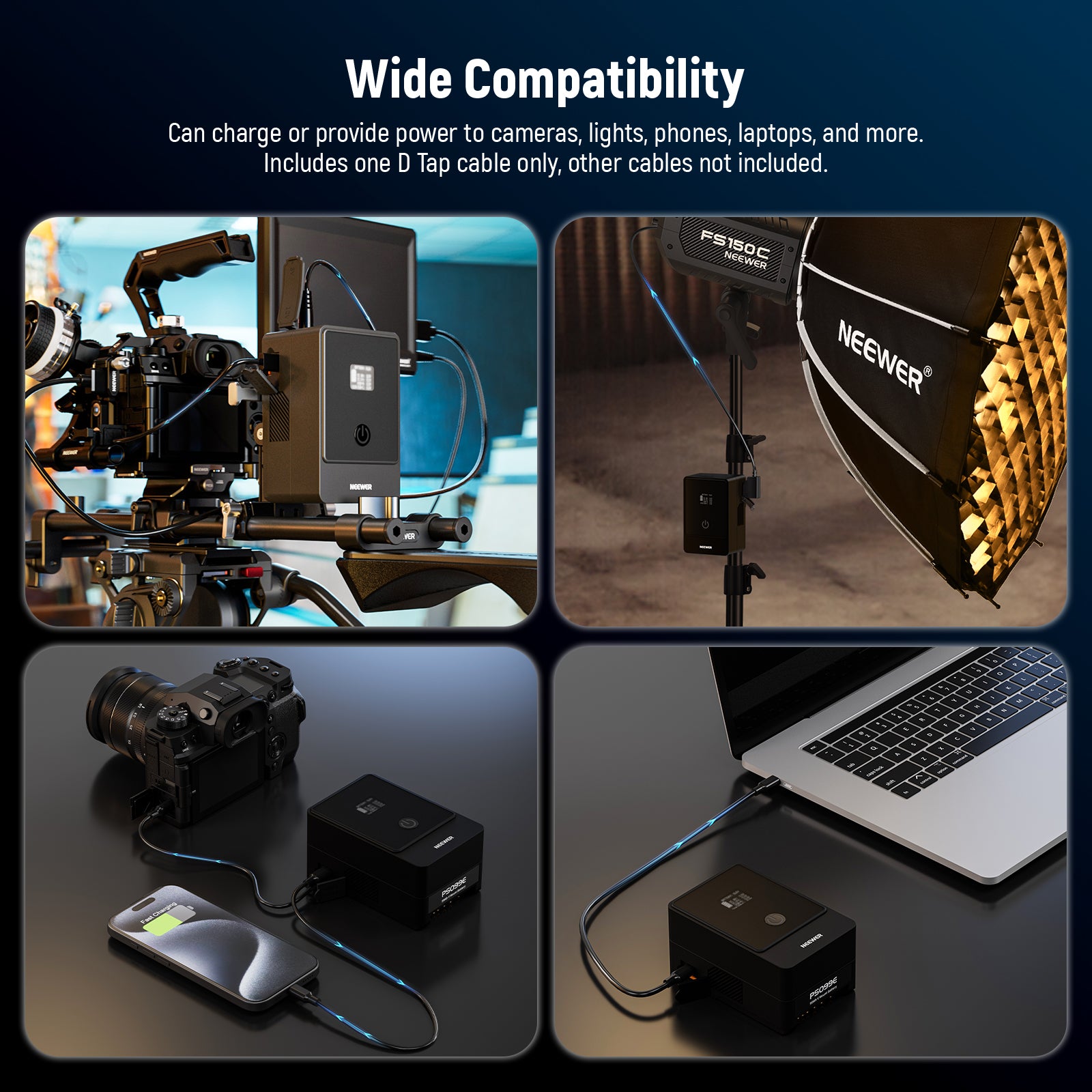
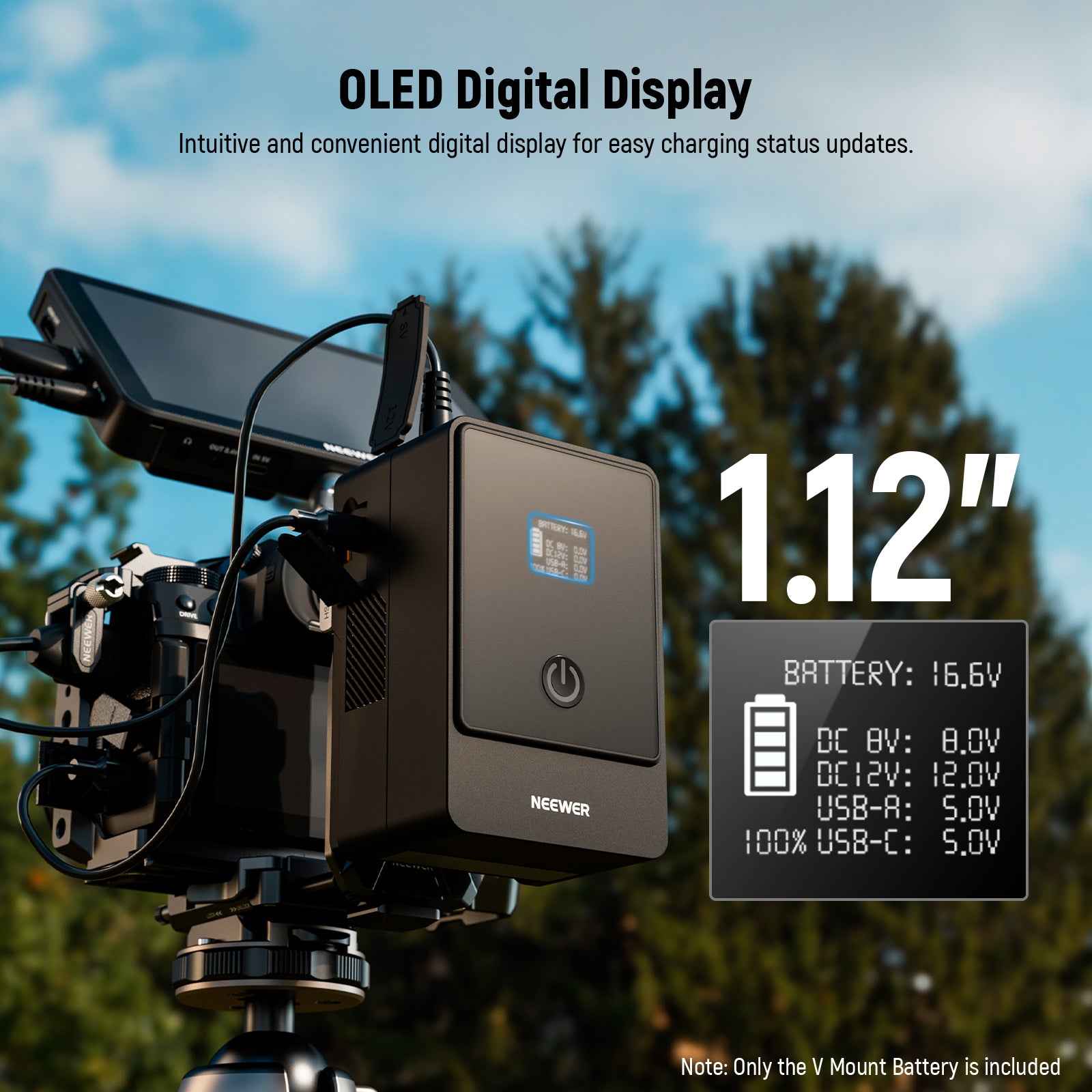
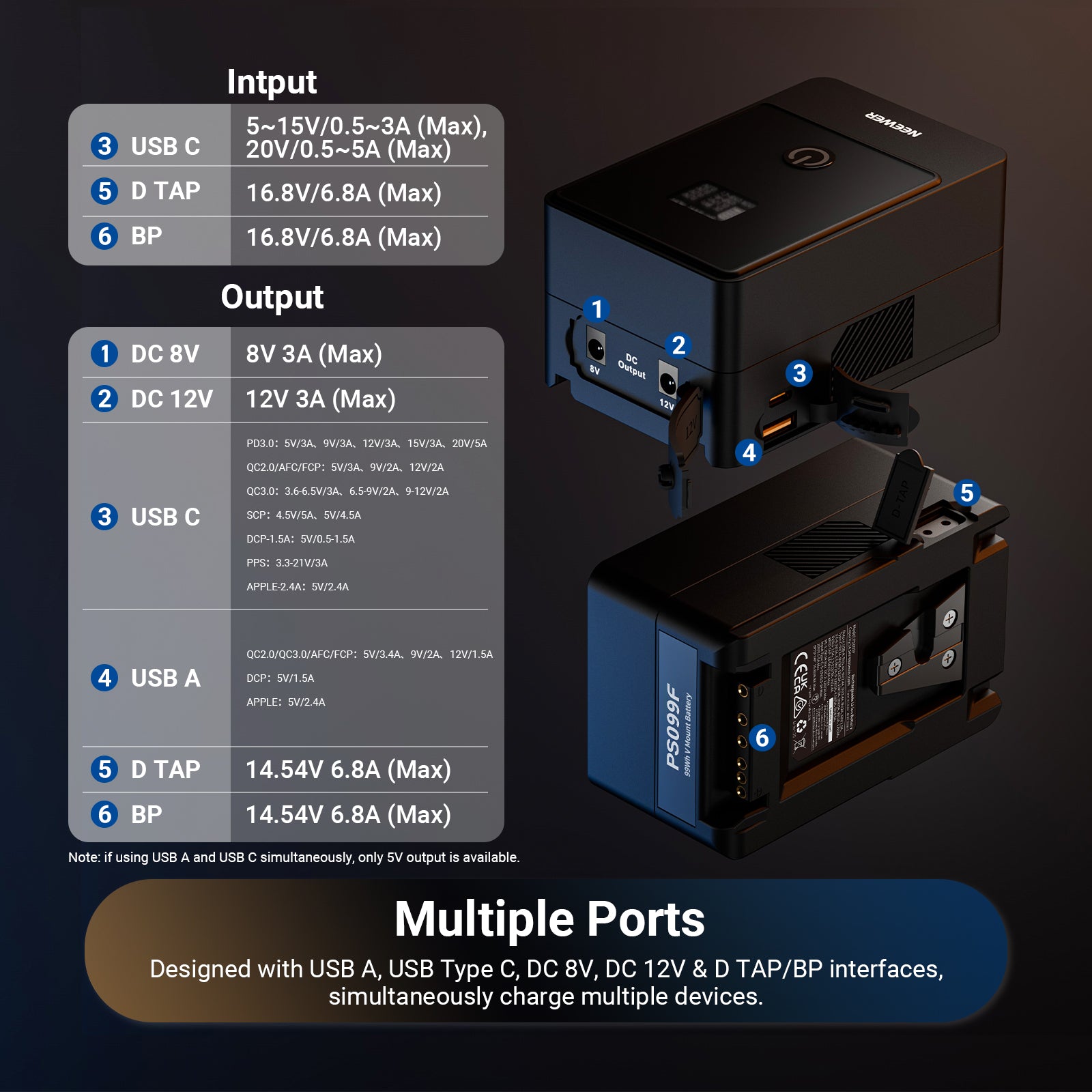
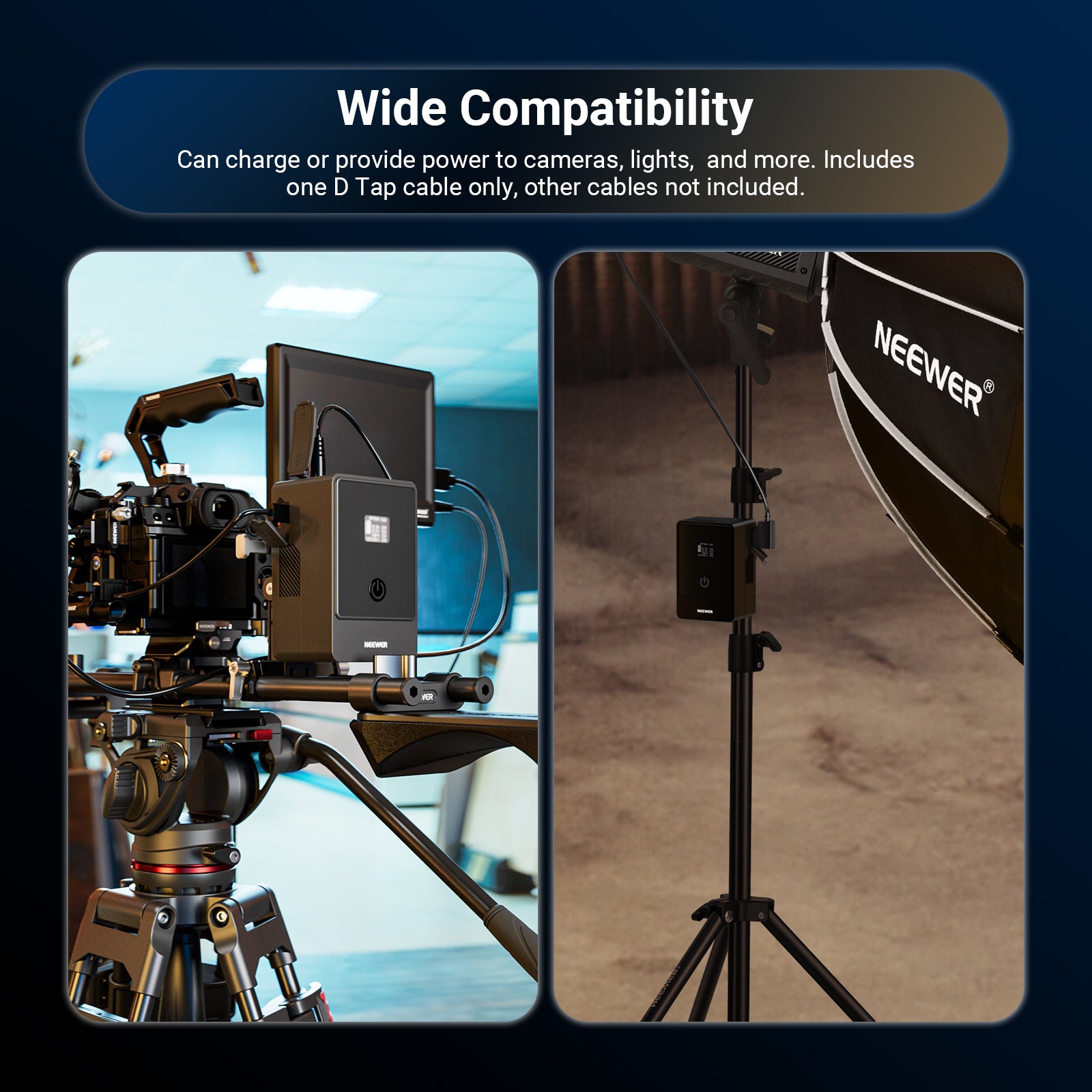
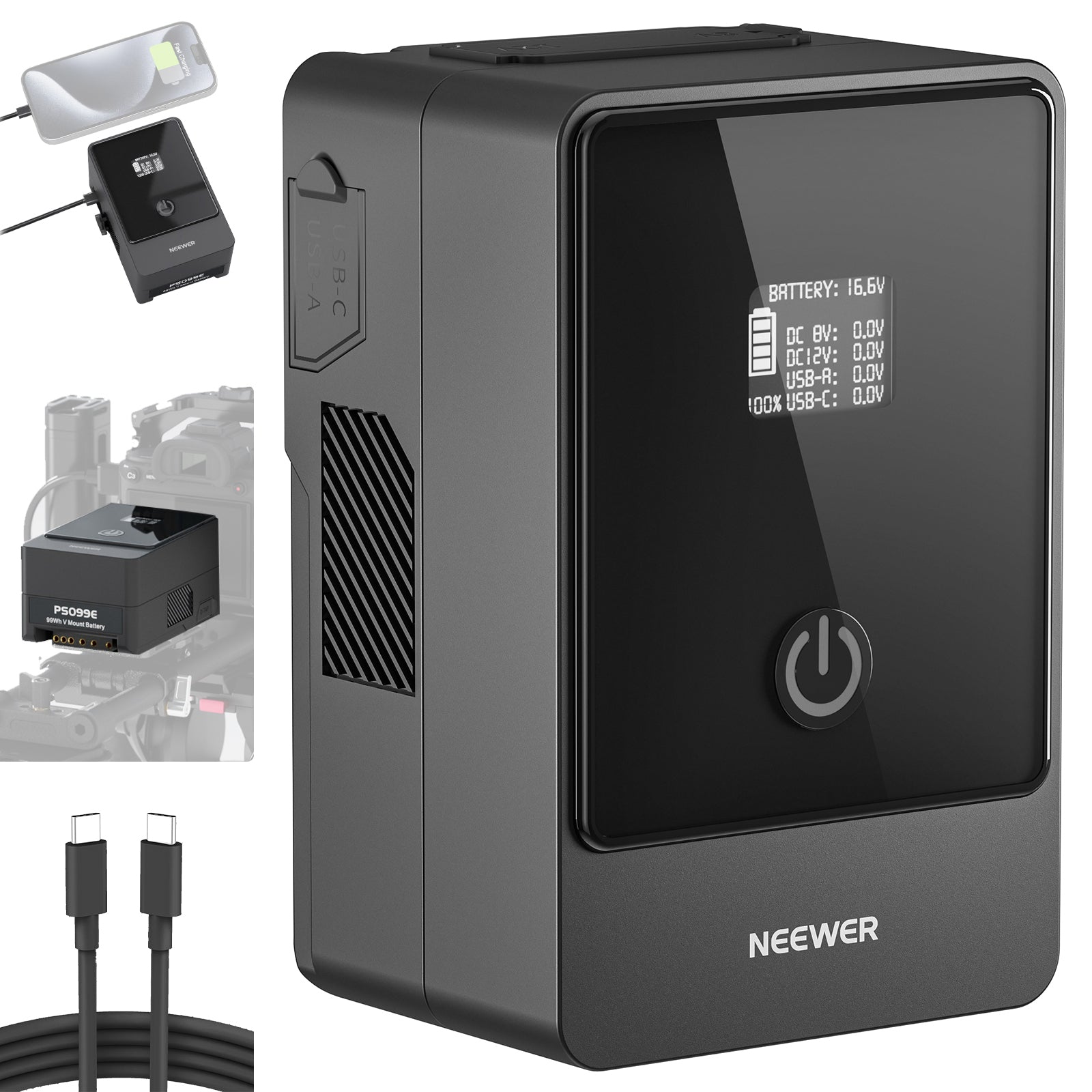
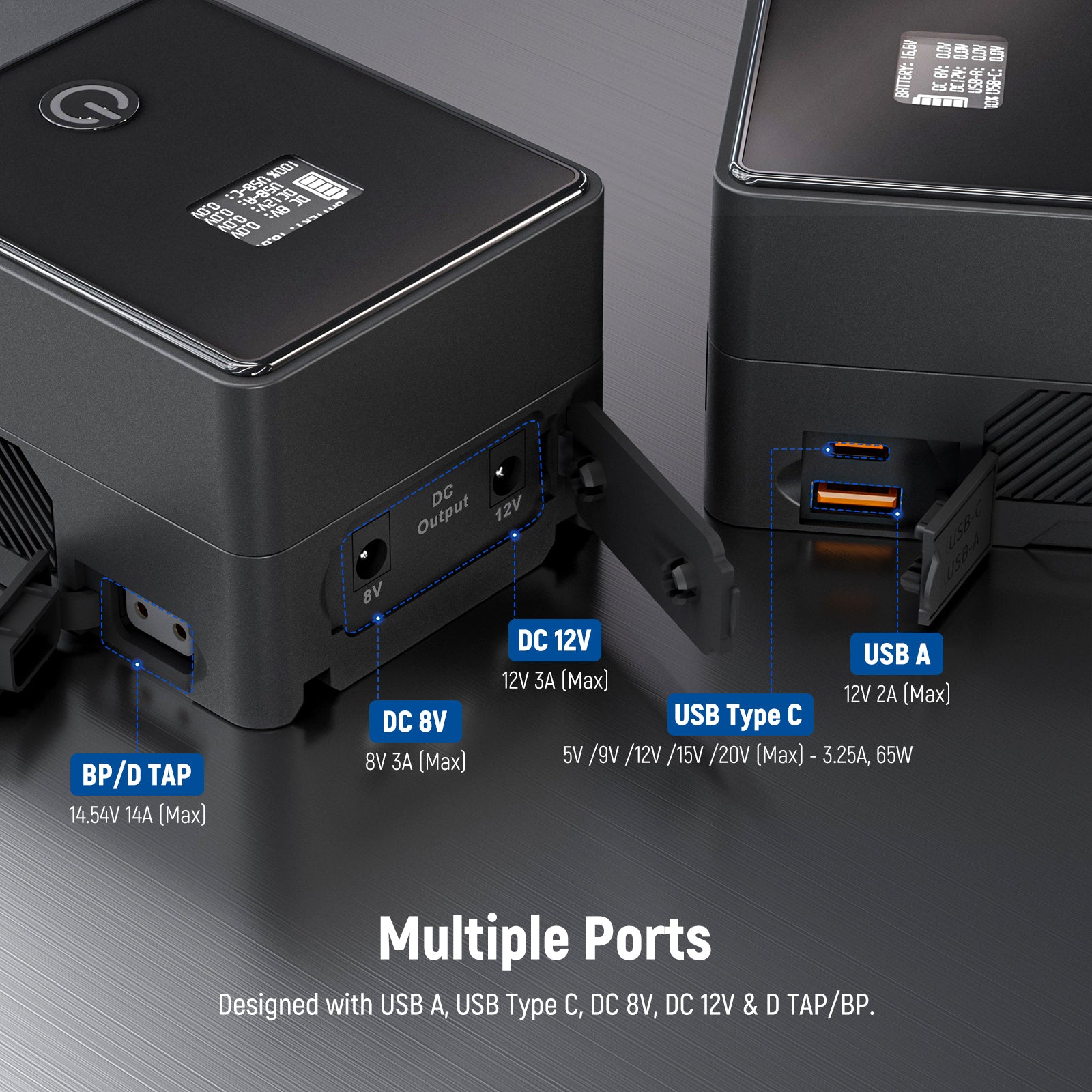
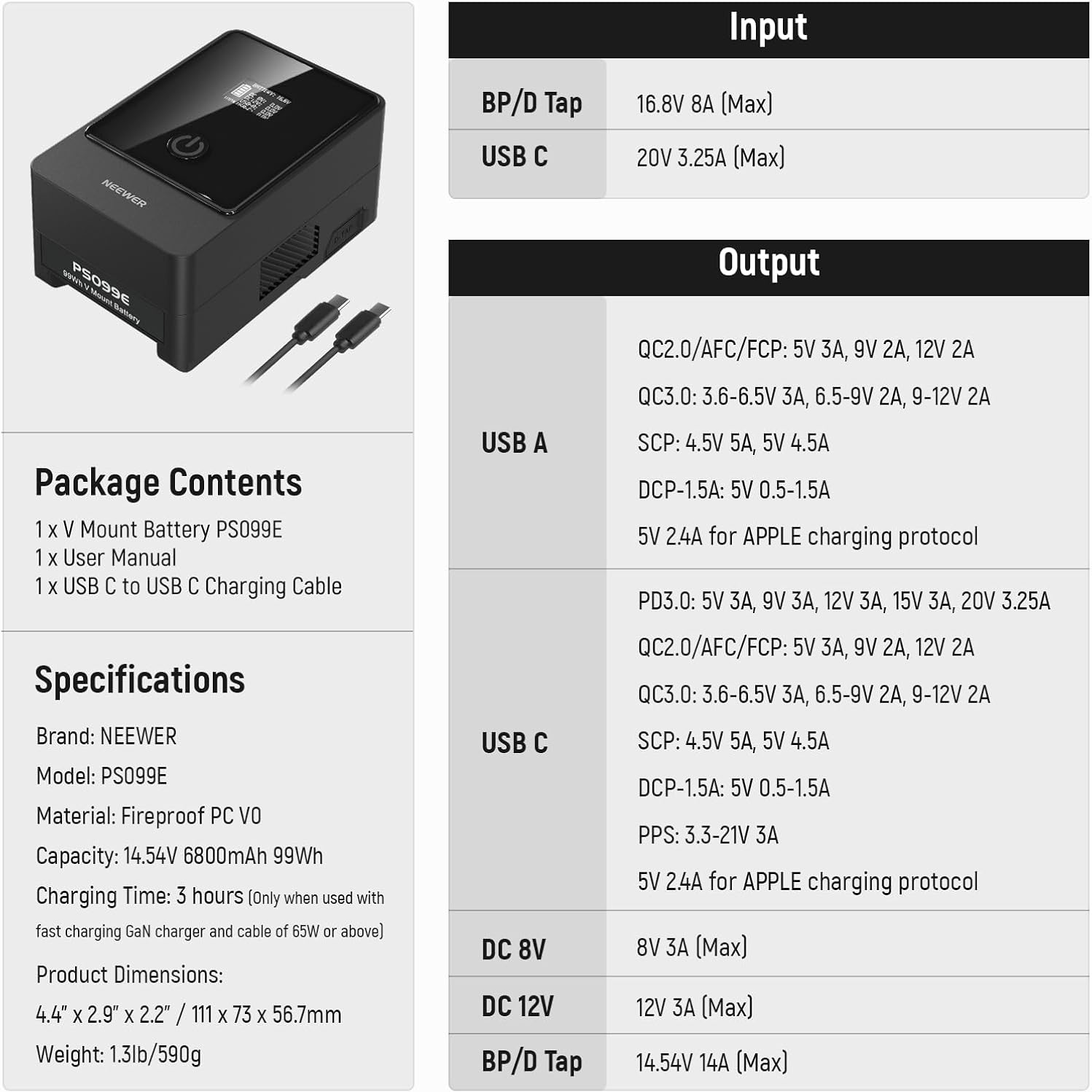
One of the biggest frustrations with traditional power setups is the tangled mess of cables and adapters. Mini V-mount batteries simplify this by integrating multiple output ports into a single device. Most models include 1–2 D-Tap ports (for professional lights and monitors), 1–2 USB-C PD ports (for cameras, smartphones, or tablets), and sometimes an HDMI or USB-A port for accessories like microphones or action cameras. This means you can power your camera, light, and monitor with one battery—no need to carry separate chargers or daisy-chain power banks. The V-lock mechanism also ensures a secure connection, so you won’t have to worry about cables disconnecting during a critical shot.
4. Perfect for Run-and-Gun and Travel
Run-and-gun shooting—whether covering a live event, documenting a road trip, or shooting street photography—demands gear that’s lightweight and easy to carry. Mini V-mount batteries fit seamlessly into this workflow: they’re small enough to slide into a camera bag side pocket, and their low weight won’t slow you down when moving between locations. For travel, they’re also compliant with most airline carry-on regulations (most models fall under the 100 Wh limit for lithium-ion batteries, no special approval needed). Unlike full-size batteries that can be too bulky for overhead bins, mini V-mounts let you keep power handy without sacrificing luggage space for other essentials.
5. Reliable Power in Places Without Outlets
Outdoor shoots, remote locations, or events in venues with limited power access can derail a project if your gear dies. Mini V-mount batteries act as a portable power grid, giving you the freedom to shoot anywhere without being tied to an outlet. Whether you’re filming a sunset hike, a wedding in a rural barn, or a documentary in a remote village, these batteries provide consistent power for hours. Their durable build (many feature aluminum casings and shock-resistant designs) also holds up to rough handling, making them suitable for outdoor adventures or rugged shooting conditions.
6. Safer and More Stable Than USB Power Banks
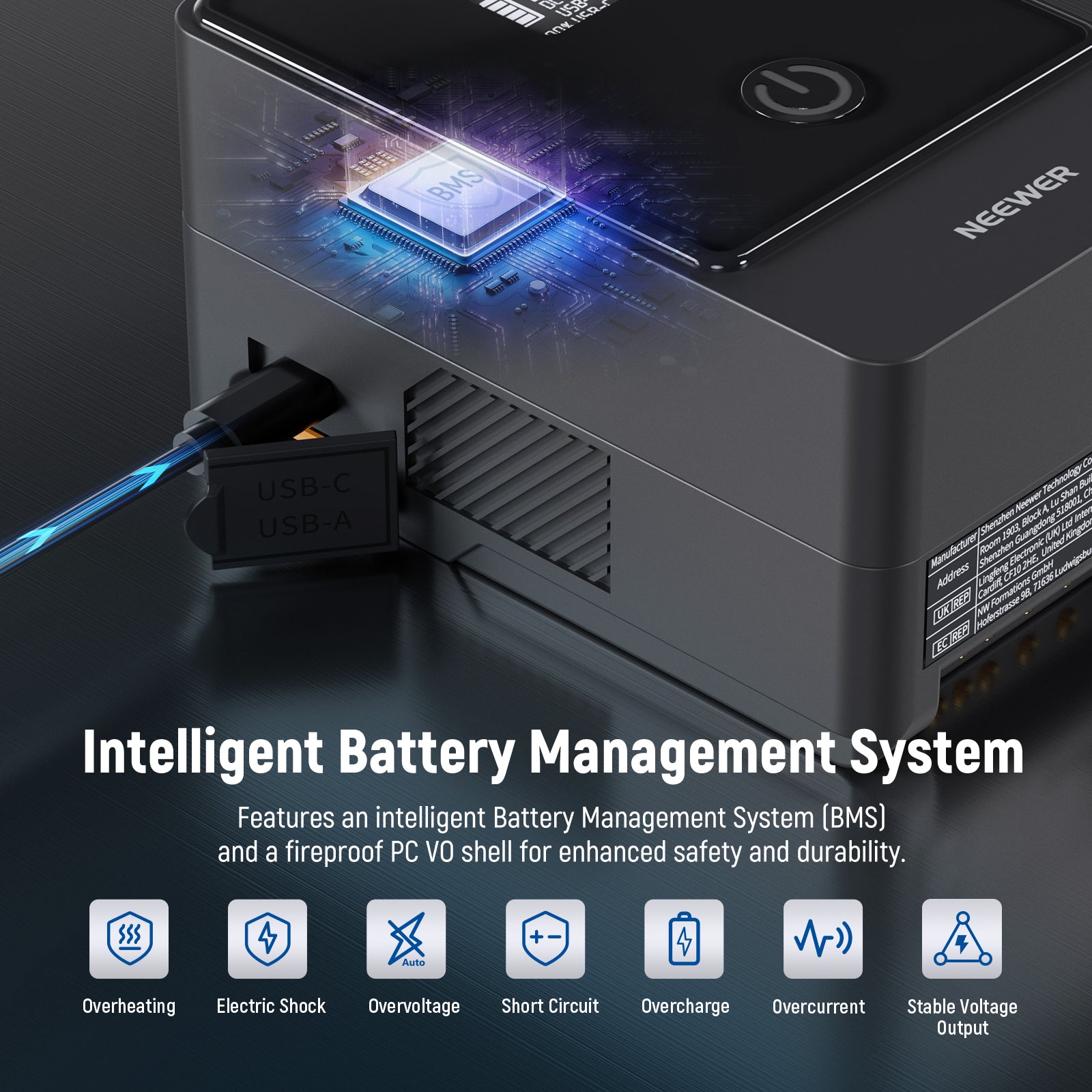
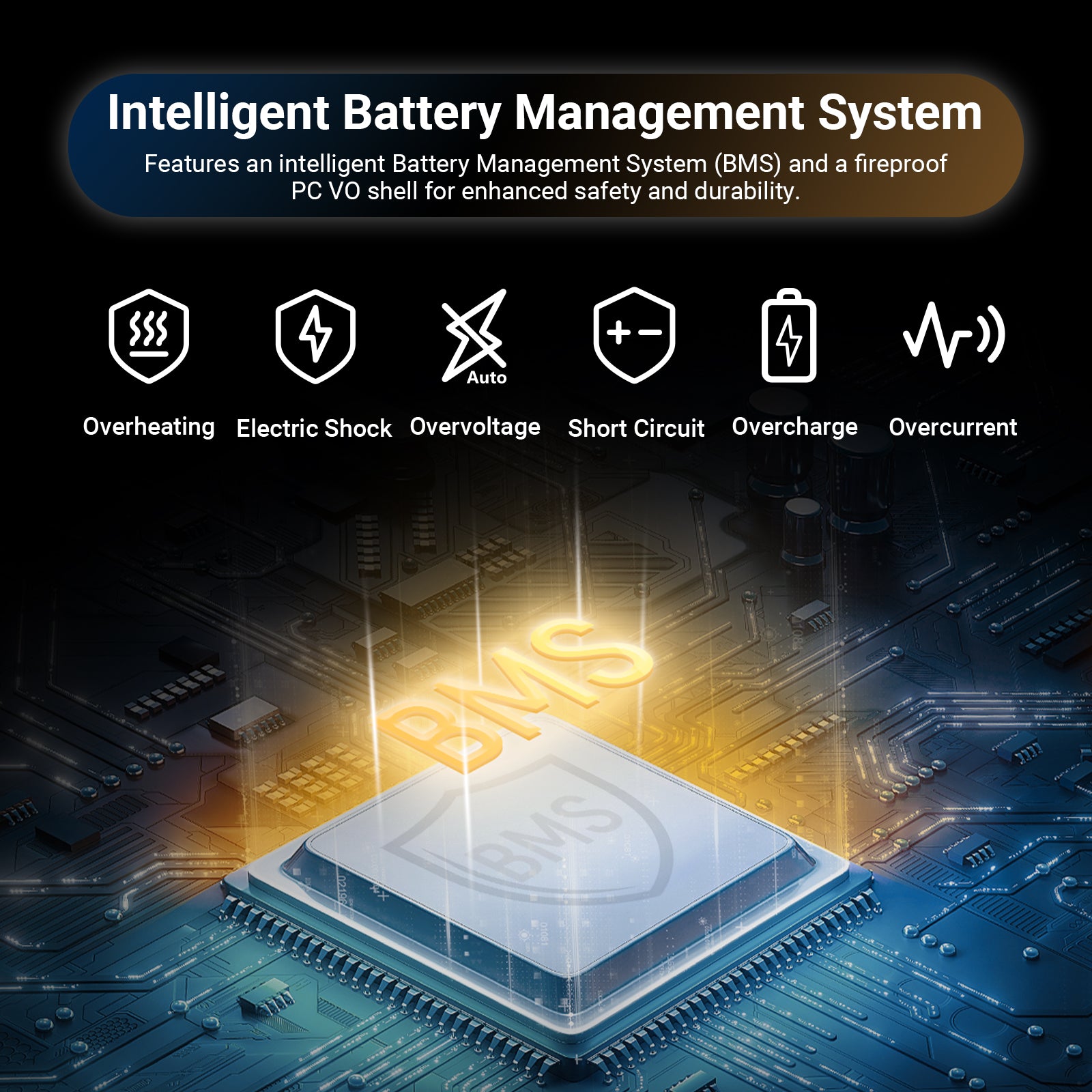
USB power banks are convenient, but they’re not designed for professional gear—many lack voltage stability, overheat under heavy use, or fail to deliver consistent power. Mini V-mount batteries, by contrast, are built to professional standards with smart protection features that prevent overcharging, over-discharging, short circuits, and overheating.
How to Choose a Mini V-Mount Battery?
1. Prioritize Watt-Hours vs. Your Gear’s Power Draw
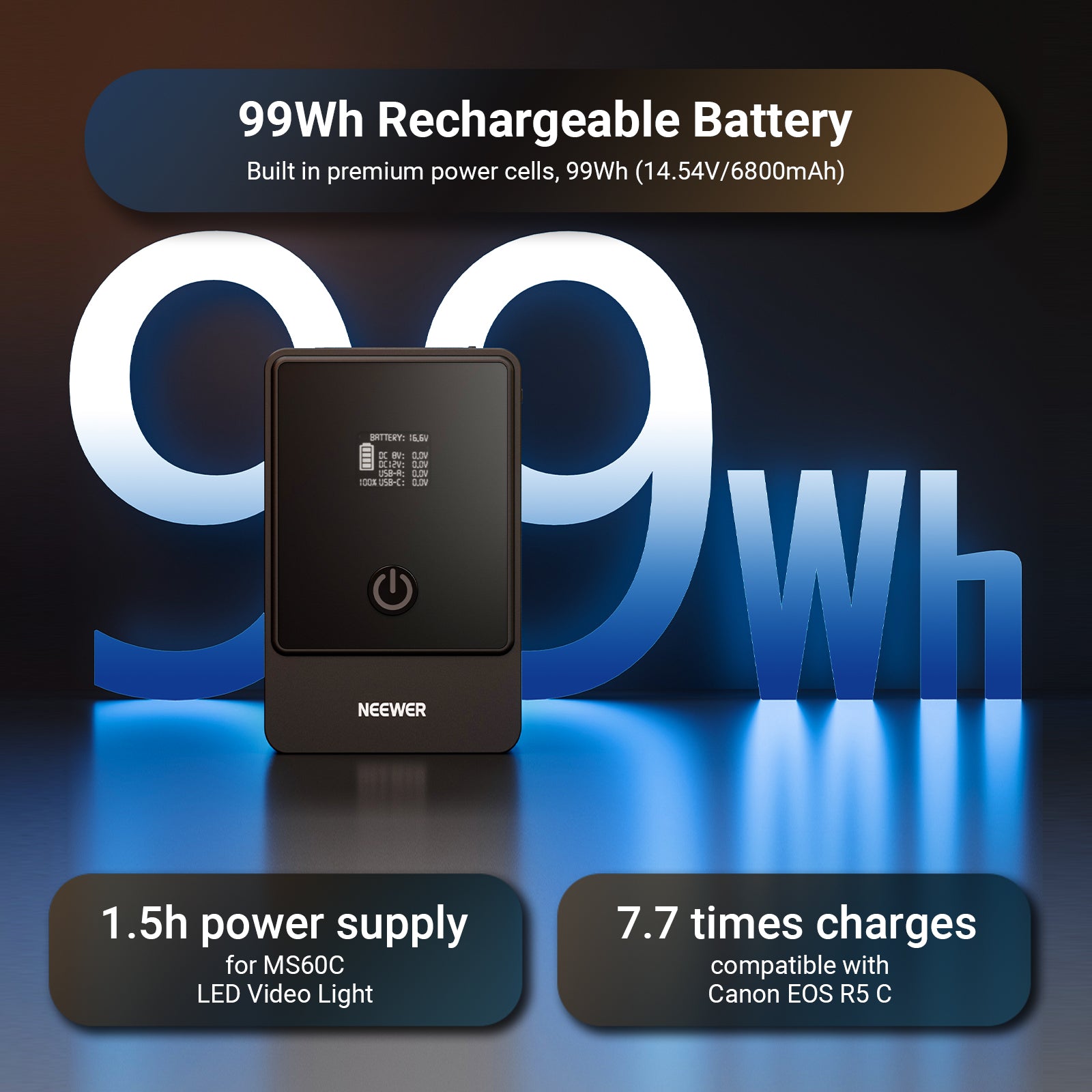
Check the mini V-mount battery’s watt-hour rating — that number shows roughly how much “juice” you’ve got. For a light camera + monitor + small LED panel rig, a ~95–100 Wh battery often gives you a few hours of shooting. For heavier loads (strobes, multiple accessories, long shoots), go for 140 Wh or more.
2. Match the Output Ports to Your Devices
Not all mini V-mount batteries have the same ports, so check that the model you choose works with your gear. Here’s what to look for:
- D-Tap Ports: Essential for professional lights or external monitors. Most mini V-mounts have 1–2 D-Tap ports—opt for two if you need to power multiple high-draw devices.
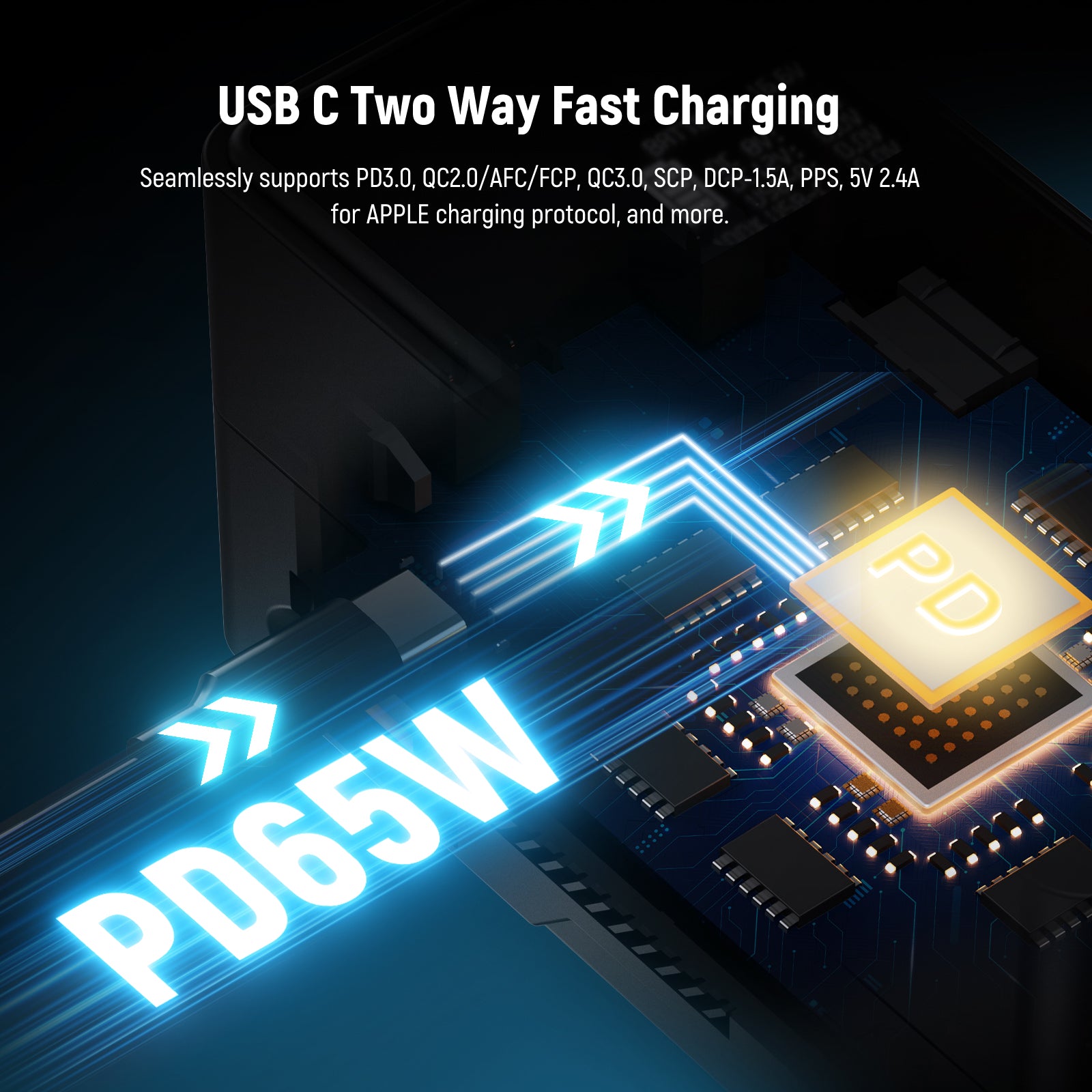
- USB-C PD Ports: Look for 60W or higher output to power mirrorless cameras or laptops. A 100W USB-C port is ideal if you need to charge a laptop on the go.
- USB-A/HDMI Ports: Useful for accessories like microphones, action cameras, or smartphones. USB-A ports with 18W Quick Charge are a nice bonus for fast-charging phones.
Make a list of your devices and their required ports before shopping—this ensures you won’t end up with a battery that can’t power your key gear.
3. Check Max Continuous Draw and Device Compatibility
Your mini V-mount battery should handle the current your gear draws. If you plug in a high-draw LED panel or a demanding camera rig, make sure the battery supports sufficient amperage via its D-Tap or V-Mount output. Lower-rated batteries can overheat or under-power heavy gear. Always check the specs before hooking gear.
4. Confirm Safety, Build Quality, and Smart Protection Features

Build quality and safety should never be overlooked—invest in a reputable brand with strong safety features. Look for mini V-mount batteries with:
- Durable Casings: Aluminum or high-grade plastic casings resist drops and impacts—critical for on-location shoots.
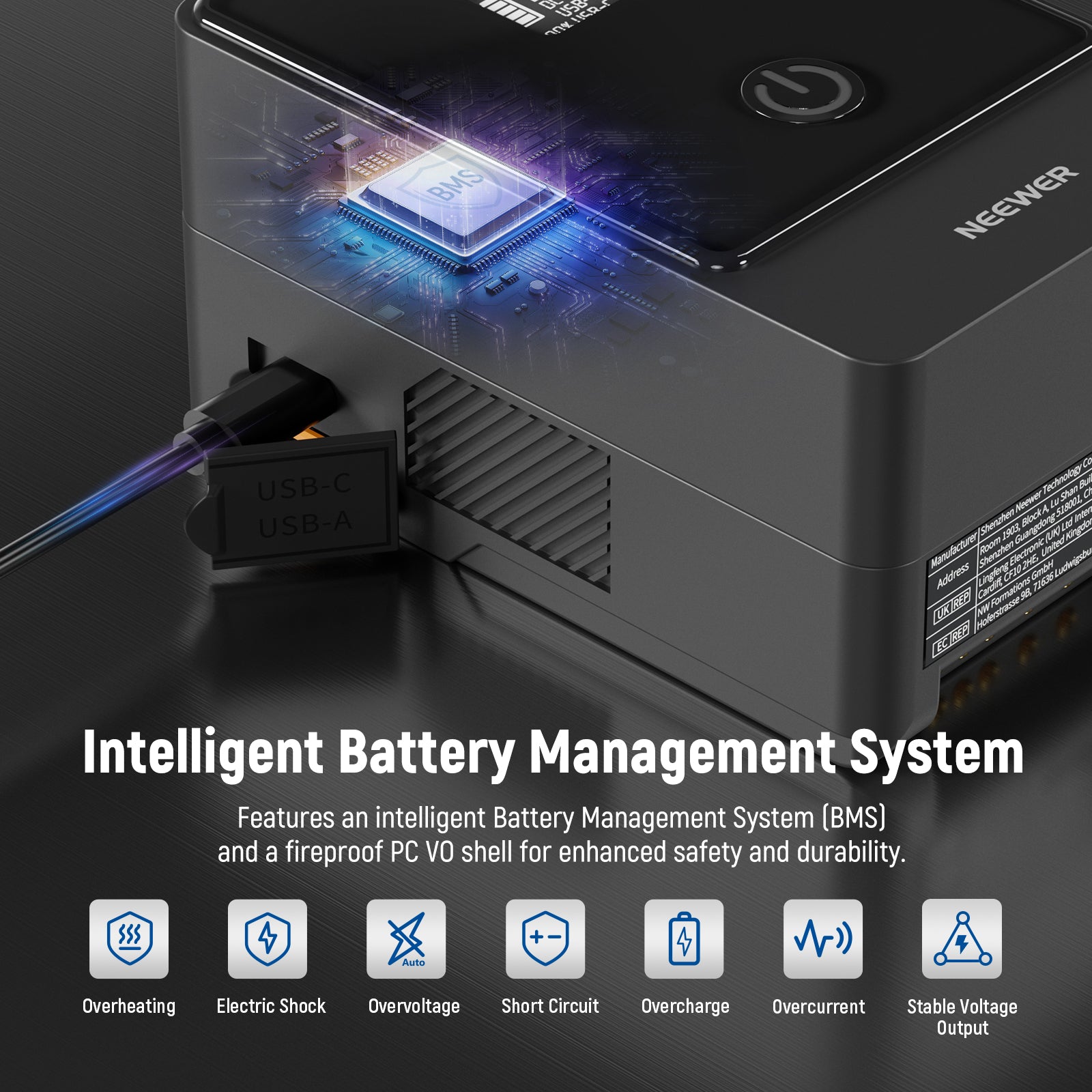
- Smart Protection Circuits: Overcharge, over-discharge, short circuit, and temperature protection are non-negotiable. Some models also include reverse polarity protection to prevent damage from incorrect wiring.
- Battery Management System (BMS): A good BMS monitors battery health, balances cell voltage, and extends lifespan—look for models with BMS listed in the specs.
5. Balance Size / Weight with Mobility Needs
Mini V-Mount batteries come in different sizes. A smaller, lighter one is great for handheld rigs, gimbals, or run-and-gun shooting. A larger one gives more runtime but adds weight. If you travel or shoot handheld a lot, lean toward compact-size batteries. If you shoot stationary or studio work, heavier higher-capacity batteries make sense.